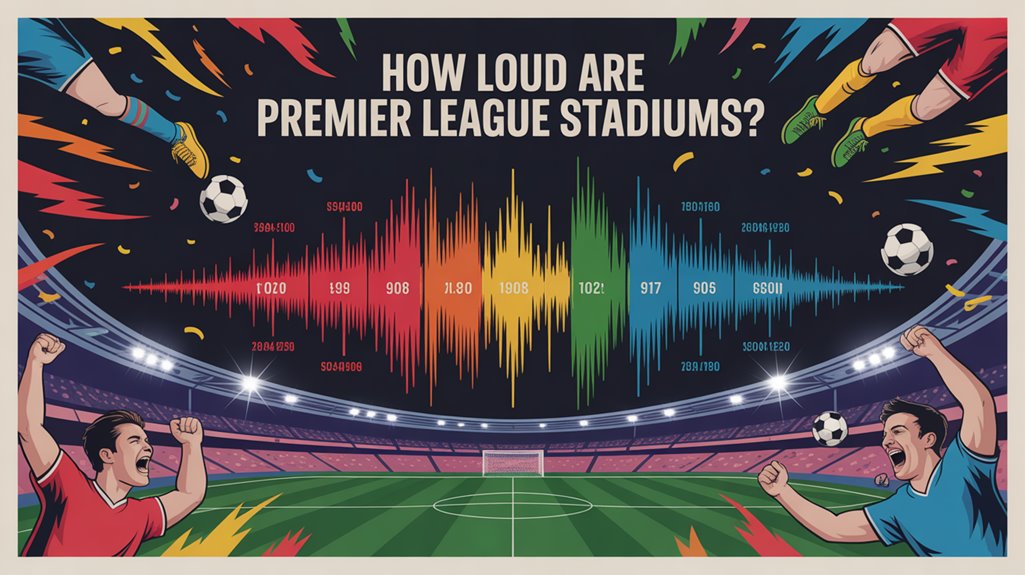
Premier League stadiums typically exhibit noise levels ranging from 80 to 120 decibels during match days. These sound levels peak during goal celebrations and vital moments within the game. A correlation exists between crowd engagement and noise intensity, with rivalries leading to pronounced spikes. The psychological effects of crowd support can enhance player performance and stamina. Understanding these interactions offers perspectives into the broader implications of stadium acoustics on match experiences. Additional analysis reveals more about crowd interactions and their impact.
How loud are Premier League stadiums during match days? This inquiry remains significant for fans, players, and researchers alike. The decibel levels recorded within these stadiums typically range from 80 to 120 decibels, particularly during high-stakes moments.
To frame the situation, sounds above 85 decibels can pose hearing risks over prolonged exposure. However, in the electric atmosphere of the Premier League, the noise often reaches peak volumes during goal celebrations and intense match situations.
The correlation between fan engagement and noise levels is notable. Stadiums such as Old Trafford and Anfield are renowned for their vociferous crowds, contributing to a home advantage for teams. Research indicates that enthusiastic crowds can influence referee decisions and boost player performance.
Studies show that players may exhibit enhanced stamina and focus under favorable crowd conditions, underlining the psychological component of support during matches.
Moreover, factors affecting sound levels include stadium design and crowd density. Modern stadiums are often constructed with noise-absorbing materials, yet the overall structure can amplify sounds. Designing for acoustics has become a focus for designers aiming to enhance the spectator experience.
Further, the type of match greatly influences auditory intensity. Rivalry matches, known as derbies, see significant spikes in noise due to heightened stakes.
The assertion that louder stadiums contribute positively to a team’s performance has led to discussions about fan engagement strategies, such as organized chants and communal support.
Frequently Asked Questions
What Factors Influence the Noise Levels in Stadiums?
Factors influencing noise levels in stadiums include crowd size, design, acoustics, event significance, team performance, and fan engagement. Each element contributes to the overall atmosphere, shaping the auditory experience for players and spectators alike.
How Do Different Teams’ Fanbases Compare in Noise?
Different teams’ fanbases exhibit varying levels of noise, influenced by regional culture, historical rivalries, and engagement. Bigger clubs often generate louder atmospheres, while smaller teams can surprise with passionate support, creating unique soundscapes across venues.
Are There Regulations on Stadium Noise Levels?
Regulations on stadium noise levels vary by location, with some jurisdictions imposing limits to minimize disruptions to nearby residents. Authorities often monitor sound levels to guarantee compliance, balancing entertainment with community peace and safety.
How Does Weather Affect Stadium Acoustics?
Weather considerably influences stadium acoustics, as temperature and humidity alter sound propagation. Wind can redirect noise, while precipitation may dampen sound levels. Consequently, fans experience variations in auditory intensity during events based on prevailing weather conditions.
What Technologies Are Used to Measure Stadium Noise?
Various technologies measure stadium noise, including decibel meters for sound intensity, acoustic cameras for visualizing sound distribution, and smartphone apps that employ built-in microphones, providing data on crowd noise and overall acoustic environment.