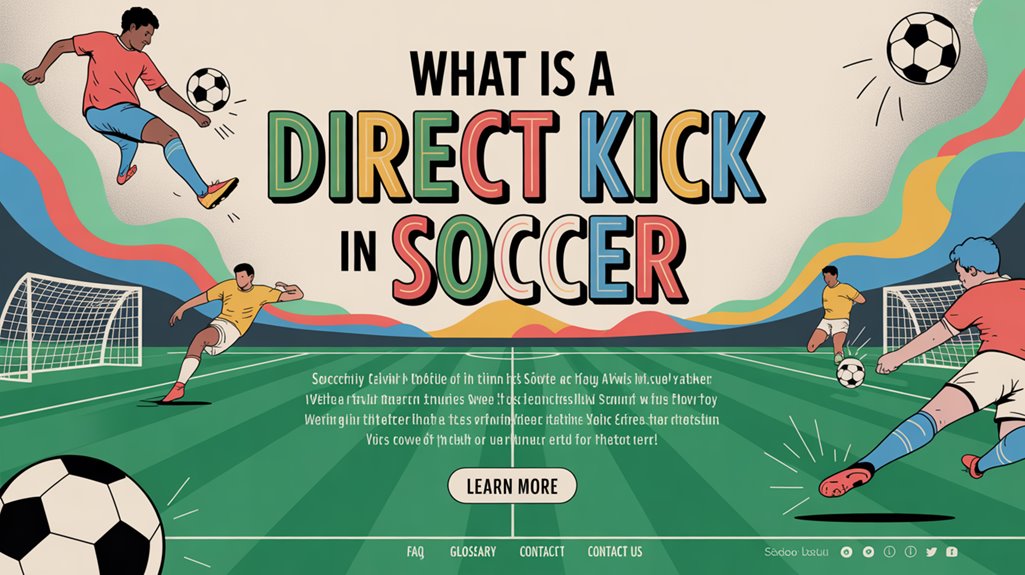
A direct kick in soccer is a method of restarting play awarded for specific fouls, such as tripping or handball. This allows a player to attempt a shot on goal without needing a pass. The ball is placed at the foul’s location, and the opposing team must maintain a ten-yard distance. Execution of a direct kick involves precise technique and strategy, as it provides a significant scoring opportunity. Further details on its tactical implications can enhance understanding.
In soccer, a direct kick is a vital method of restarting play following certain fouls. This type of free kick allows the player taking the kick to shoot directly at the goal without the requirement of passing or touching the ball to another player first. It is awarded following specific infractions, such as tripping, pushing, or handball, making it a significant event in a match.
The mechanics of a direct kick involve the placement of the ball at the site of the foul. The defending team must position themselves at least ten yards away from the ball to guarantee fair play. The player designated to take the kick has the opportunity to strike the ball, aiming to either score a goal or create a scoring opportunity for teammates.
The mechanics of a direct kick require precise placement and strategic distancing, allowing players to create scoring opportunities.
The skill involved in executing a direct kick varies widely among players. Some employ powerful strikes, while others use intricate techniques such as curls or dips to complicate the goalkeeper’s actions. The ability to accurately strike the ball under pressure can greatly influence the outcome of a game. Consequently, training for such situations is a key focus for many soccer teams.
Strategically, a direct kick can serve multiple purposes. For example, teams may choose to position multiple players around the ball, creating potential distractions or attempting to confuse defenders. This tactic can maximize the likelihood of scoring or generating a rebound chance. Coaches often emphasize set-piece tactics during training to enhance their effectiveness during matches.
Direct kicks can also evoke significant psychological pressure. The position of the ball often places teams in pivotal scenarios that can change momentum. An effective direct kick can elevate a team’s confidence while demoralizing opponents.
Frequently Asked Questions
Can a Direct Kick Be Taken Quickly?
The possibility of taking a direct kick quickly often depends on the referee’s approval. Players can execute a quick kick to catch opponents off guard, enhancing their chances of scoring or advancing the ball effectively.
What Happens if the Ball Hits the Referee?
When the ball hits the referee during play, the game continues unless it directly alters the outcome, in which case the referee will stop the match and restart it appropriately based on the situation.
Can Players Be Carded During a Direct Kick?
During a direct kick, players can indeed be carded for unsporting behavior or foul play. The referee has the discretion to issue yellow or red cards based on the nature of the infraction committed.
How Far Must Players Stand From the Ball?
When a direct kick is taken in soccer, opposing players must maintain a distance of at least ten yards from the ball until it is in play, ensuring fair play and safety during the execution.
Is a Direct Kick Awarded for All Fouls?
The current question addresses whether a direct kick is granted for all fouls. Generally, direct kicks are awarded for certain infractions, but not every foul results in this type of restart based on the nature of the offense.