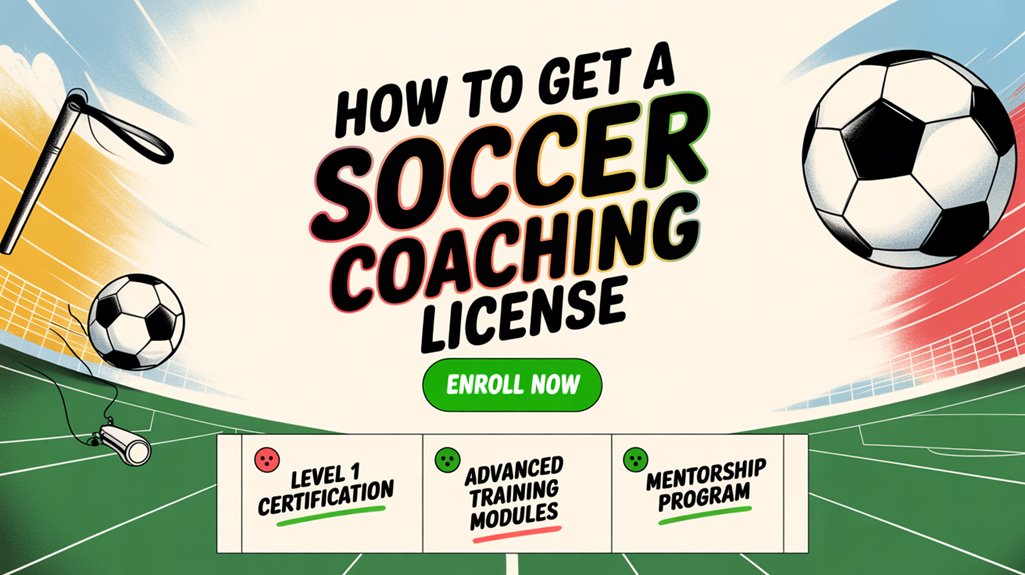
To obtain a soccer coaching license, individuals must identify the relevant governing body for their region and meet any prerequisites, such as prior playing experience. They should engage in theoretical and practical coursework that covers coaching strategies, player development, and team management. After completing the required training, candidates must pass written and practical assessments to demonstrate their competencies. Upon successful completion, they can progress to advanced certifications, further enhancing their coaching qualifications and effectiveness, among other crucial considerations.
Obtaining a soccer coaching license is a critical step for individuals aspiring to cultivate effective coaching skills and advance in the field of soccer. The pathway to licensure involves a structured progression through various levels of coaching education. Each level is designed to equip coaches with specific competencies necessary for player development and team management.
Initially, aspiring coaches must identify the appropriate governing body that oversees soccer in their region. In many countries, national federations align their coaching programs with the guidelines established by international bodies like FIFA. Registration typically requires applicants to meet prerequisites, such as previous playing experience or foundational coaching knowledge. Many aspiring coaches begin by volunteering at clubs to gain valuable hands-on experience before pursuing formal certification. Developing strong observational abilities is crucial for coaches to effectively evaluate player performance and potential during their training journey.
Aspiring coaches must first identify their regional governing body and meet necessary prerequisites for registration.
Once registered, candidates participate in theoretical and practical coursework. The courses cover diverse topics, including soccer tactics, physical conditioning, psychological aspects of coaching, and player assessment methods. This curriculum aims to provide a thorough understanding of the sport, ensuring coaches are well-prepared to tackle the challenges of team leadership. Many coaches gain valuable insights by studying academy training programs that have proven successful in developing young talent. Creating skill-building drills is a fundamental aspect of the coursework, helping coaches learn how to effectively develop players’ abilities from the ground up.
Following completion of coursework, candidates must demonstrate their knowledge through assessments, which frequently include both written examinations and hands-on coaching evaluations. These evaluations are critical, as they test a candidate’s ability to apply learned concepts in real-world situations. Successful completion of these assessments allows individuals to progress to higher levels of licensure.
After achieving initial licensing, coaches are encouraged to pursue advanced certifications. These advanced courses explore deeper into specialized areas, such as youth coaching or elite athlete development. Continuous professional development is emphasized, as the soccer environment is perpetually changing due to shifts in tactics, training methods, and technological advancements.
Ultimately, obtaining a soccer coaching license is not merely a formality; it represents a commitment to upholding coaching standards and enhancing player experiences. Licensed coaches contribute to the overall development of soccer by promoting skillful and competitive environments for athletes at all levels. The most successful coaches focus on creating positive training environments that emphasize both skill development and player enjoyment.
Frequently Asked Questions
What Is the Cost of Obtaining a Soccer Coaching License?
The cost of obtaining a soccer coaching license varies considerably, often ranging from a few hundred to several thousand dollars. Prices are influenced by the level of certification, location, and specific requirements of the coaching program.
Are Online Courses Available for Soccer Coaching Licenses?
Online courses for soccer coaching licenses are increasingly available, catering to aspiring coaches’ needs. These programs provide flexibility, allowing participants to learn essential coaching strategies and methodologies at their own pace while ensuring thorough skill development.
Do Coaching Licenses Expire or Need Renewal?
Coaching licenses typically have an expiration date, requiring renewal after a certain period. This process often includes continuing education, workshops, or updated training to guarantee coaches stay current with best practices in the sport.
Can I Coach Without a Certification?
Coaching without certification is possible, as many grassroots programs and informal leagues do not require formal credentials. However, certified coaches often provide enhanced knowledge and skills, improving the experience for both players and the overall team.
What Age Group Should I Start Coaching?
Determining the ideal age group for coaching varies based on personal preference and experience. Many experts recommend starting with younger players, typically ages 6 to 10, to instill foundational skills and a love for the game.