Image source: bbc.com
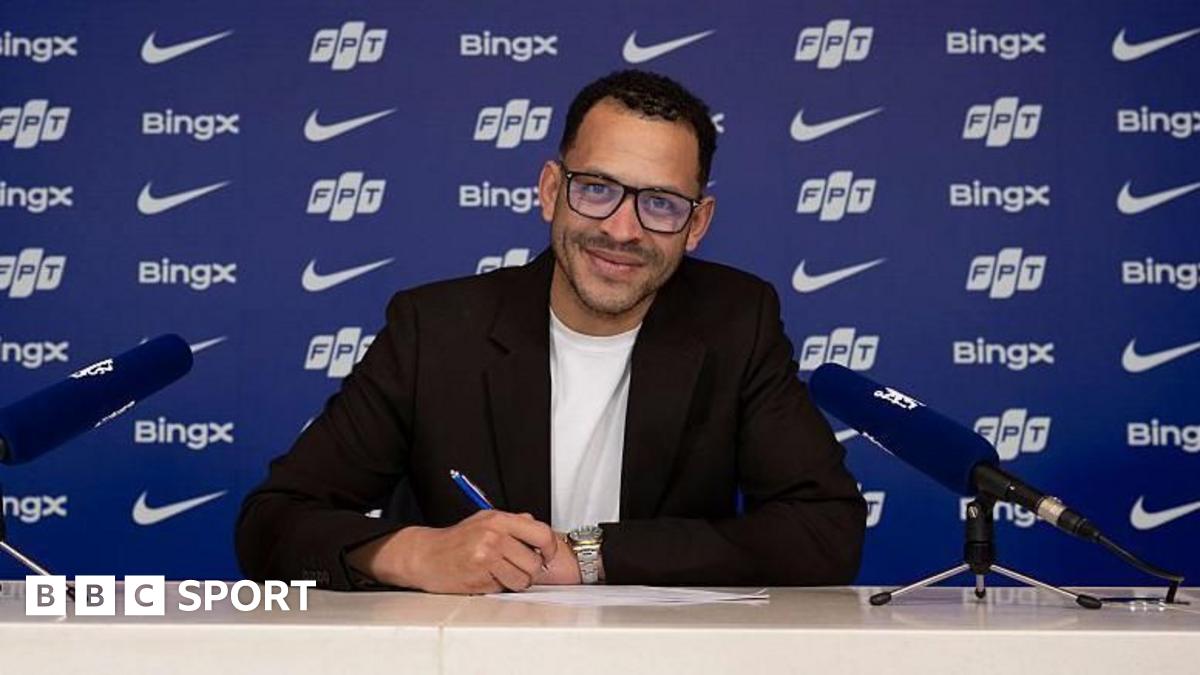
Liam Rosenior becomes Chelsea’s fifth full-time head coach in five years, bringing tactical experience from Hull City and Strasbourg with a promise to have fans “off their seat in the first 10 minutes” of every match despite the Blues going five games without a win.
How New Chelsea Boss Liam Rosenior Will Set Up His Team Tactically
The 41-year-old manager employs a distinctive defensive approach that adapts to opposition threats, particularly when rivals deploy five attacking players. Rosenior’s sides adopt a back-five shape while defending near their goal, comprising three central defenders and two wing-backs, though sometimes he creates this formation by asking wingers to drop alongside the back four. At Chelsea, Pedro Neto may be tasked with this role given his work-rate, with the defensive line receiving protection from two central midfielders and three narrow attackers.
Higher up the pitch, Rosenior’s Strasbourg maintained this 5-2-3 shape while applying more intense pressure to win back possession. On occasion, the team pressed from a 4-4-2 starting shape when opposition teams built with a back four rather than three, reducing the distances wide players had to cover to pressure opponent full-backs. This tactical flexibility allowed Strasbourg to adapt their pressing intensity based on how rivals structured their build-up play.
Rosenior’s possession tactics center around a 3-2-2-3 shape when his team has the ball, irrespective of how many natural defenders are on the pitch. This mirrors the formation used by predecessor Enzo Maresca, though Rosenior prefers both midfield players to be starting central midfielders rather than inverting a full-back alongside Moises Caicedo. This approach reduces the likelihood of exposing the middle of the pitch, with Reece James potentially considered for a central midfield role and Andrey Santos, whom Rosenior coached at Strasbourg, another contender for the position.
The attacking structure allows significant experimentation, with four roles often occupied by combinations of wingers, full-backs or wing-backs. If wide defenders excel centrally, Rosenior gives them license to move behind the striker, similar to how Maresca used Marc Cucurella and Malo Gusto, paired with wingers who hold width. Alternatively, when forwards like Cole Palmer or Estevao Willian prefer moving inside, playing with wide defenders suited to hugging the touchline makes tactical sense.
Rosenior’s goalkeeper usage involves heavy participation in build-up play, with Strasbourg often setting up in a 5-2-4 shape from goal-kicks to entice opposition pressing and create space higher up the pitch. However, this approach led to Strasbourg having the joint-most errors leading to goals in Ligue 1 this season, though the hope is that Chelsea’s superior players will reduce such mistakes. Against compact defenses, his teams struggle to break down opponents despite keeping possession well, with the 3-2-2-3 shape leaving only five players to attack while maintaining defensive stability.