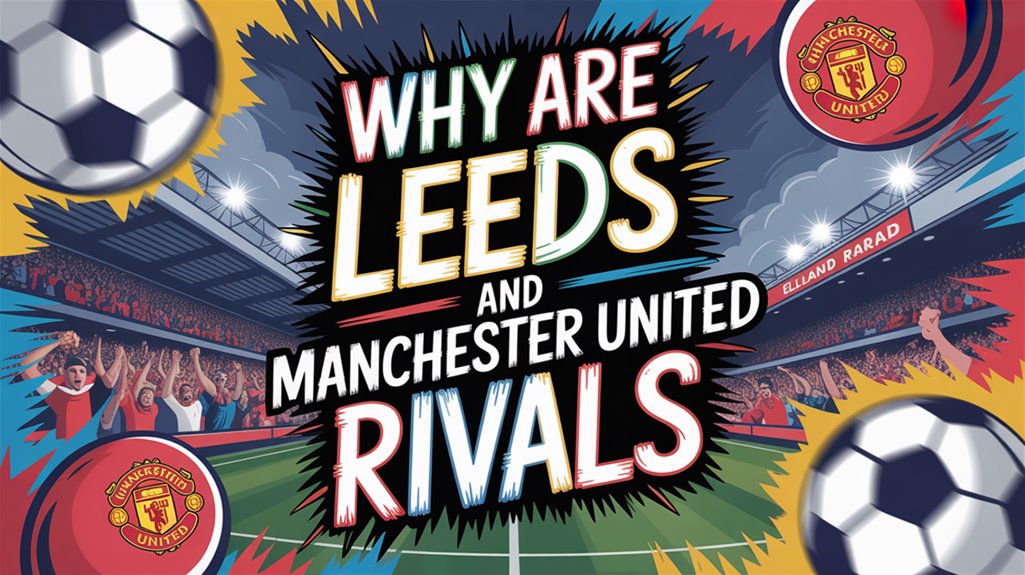
The rivalry between Leeds United and Manchester United is deeply rooted in historical, economic, and geographic factors. Established during the early 20th century, tensions escalated in the 1960s and 1970s as both clubs experienced significant success. Their proximity, approximately 40 miles apart, fuels local honor and animosity. Additionally, economic competition between Leeds and Manchester intensified the rivalry. These elements combine to create a fierce and enduring contest that enthralls fans and impacts the broader terrain of English football. Further exploration reveals even more about this historic rivalry.
The rivalry between Leeds United and Manchester United is one of the most storied in English football, characterized by intense competition and a rich historical background. This contentious relationship can be traced back to the early 20th century, gaining momentum during the 1960s and 1970s when both clubs were at their competitive peak. It is rooted in geographical proximity, with only around 40 miles separating the two cities, creating a natural source of local honor and animosity.
Historically, both clubs have experienced significant achievements, enhancing their status in the English league system. Manchester United, established in 1878, has become one of the most successful clubs in football history. Their triumphs, particularly under legendary manager Sir Matt Busby and later, Sir Alex Ferguson, have cemented their position at the top of English football. While Liverpool remains their biggest football rival, the Leeds-Manchester United rivalry holds its own unique intensity.
Both clubs have achieved remarkable success, solidifying their legacies in English football’s storied history.
Similar to the industrial competition that fueled the Liverpool-Manchester United rivalry, economic tensions between Leeds and Manchester contributed to their fierce relationship. Conversely, Leeds United, formed in 1919 and achieving considerable success in their own right, was known for their aggressive style of play under manager Don Revie during the 1960s and 1970s. This period of success led to fierce encounters between the two teams.
The rivalry is marked by memorable matches, where both clubs have fought valiantly for both league positions and national honor. High-stakes encounters often lead to intense atmospheres in the stadiums, with passionate fan involvement adding to the rivalry’s depth. The emotional significance of matches between these two sides transcends mere points on a league table; they represent broader issues of identity and regional loyalty. The thrilling victories between these clubs have consistently captured worldwide attention, much like other major football rivalries. As the sport’s popularity grows in America, these historic matchups have gained new viewership through international broadcasts and social media coverage.
In contemporary football, the rivalry continues, with matches drawing considerable viewership and attention from fans and media alike. As both clubs endeavor to reclaim their historic dominance in English football, the rivalry persists, showcasing not only the ardor of the teams involved but also the enduring appeal of competitive sports.
Understanding the historical backdrop of the Leeds and Manchester United rivalry provides significant understanding into why it remains one of the most important rivalries in football. Like many notable soccer derbies worldwide, these matches have become cultural events that unite communities while intensifying the competitive spirit between rival cities.
Frequently Asked Questions
What Is the Historical Origin of the Leeds and Manchester United Rivalry?
The historical origin of the Leeds and Manchester United rivalry can be traced back to competitive matches, geographical proximity, and contrasting club philosophies, which intensified the animosity between the supporters and fueled a fierce sporting rivalry over decades.
How Many Times Have Leeds and Manchester United Faced Each Other?
Leeds and Manchester United have faced each other numerous times across various competitions, including league matches and domestic cups. Their encounters are rich in history, adding to the intensity of their competitive relationship over the decades.
Who Are the Most Famous Players in This Rivalry’s History?
The most famous players in this rivalry’s history include Leeds’ legendary striker Peter Lorimer and Manchester United’s iconic winger George Best. Their performances not only highlighted individual talent but also intensified the fierce competition between the clubs.
What Impact Has the Rivalry Had on Local Communities?
The rivalry between Leeds and Manchester United greatly influences local communities, nurturing a sense of identity and belonging. Events related to the rivalry galvanize local businesses and communities, sparking passion and engagement among residents.
Are There Any Other Rivalries Involving Leeds and Manchester United?
Leeds and Manchester United’s rivalry overshadows many local derbies, although both clubs also engage with rivals like Liverpool and Sheffield United. These matches evoke strong emotions within communities, often reflecting regional honor and historical conflicts.