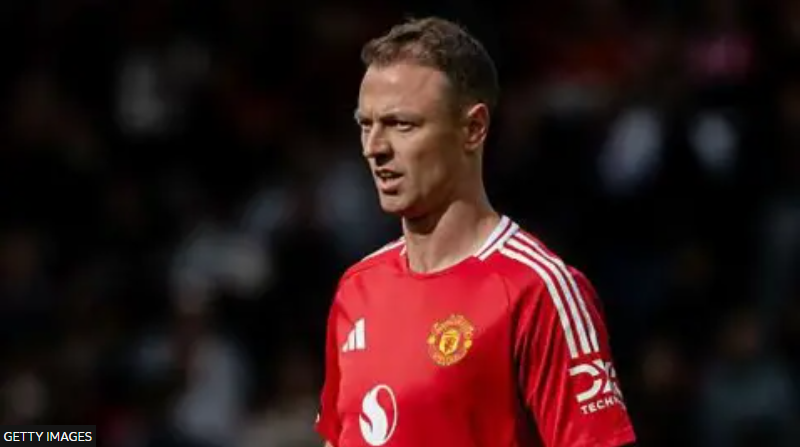
Club legend Jonny Evans has returned to Manchester United in a strategic role focused on youth development. His shift from player to mentor highlights the club’s commitment to integrating former stars into operational functions. Evans’ perspective is expected to enhance the loan system and player progression within the academy. This decision aligns with the club’s broader financial resurgence and commitment to nurturing young talent, indicating a forward-thinking approach that seeks sustainable success. Further details reveal the implications of this shift.
The recent resurgence of Manchester United reflects a complex interplay of financial restructuring and competitive performance, signaling a potential turnaround for the storied football club. A notable aspect of this revival is the strategic reengagement of former players, epitomized by Jonny Evans’ return in a non-playing role. Evans exemplifies the club’s focus on mentorship and youth development, contributing his extensive experience to nurture emerging talents. His potential role as a loan manager for academy prospects reflects the club’s commitment to optimizing the loan system for player development.

Financially, Manchester United achieved a significant turnaround in fiscal 2025, posting an operating profit of £0.7 million in Q3, contrasting sharply with a £66.2 million loss a year earlier. Cost-cutting measures proved effective, with the wage bill reduced by £42.6 million year-on-year, the lowest since the 2019-20 season. This was largely due to the club’s absence from the Champions League. The club also streamlined operations by cutting 450 non-playing staff, leading to a 20.4% drop in operational expenses for the same quarter. This financial prudence, alongside an impressive 274% increase in adjusted EBITDA to £51.2 million, positions Manchester United for sustainable growth. The club’s 20 Premier League titles cement its status as England’s most successful team. The club’s global fanbase of over 1.1 billion followers demonstrates its unparalleled worldwide appeal.
Manchester United’s Q3 fiscal 2025 turnaround showcases a £0.7 million profit, a stark contrast to last year’s £66.2 million loss.
Despite finishing 15th in the Premier League, the club’s expedition to the Europa League final heightened revenues, increasing quarterly revenue by 17% year-over-year to £160.5 million. This success enhanced projections for fiscal 2025 EBITDA, now estimated between £180 million and £190 million.
In this structure, Evans’ return as a mentor aligns with the club’s focus on youth development strategies, utilizing loan spells to cultivate player progress. The integration of past legends into the organizational composition enhances continuity and builds stability, underlining a commitment to both immediate improvement and long-term success.