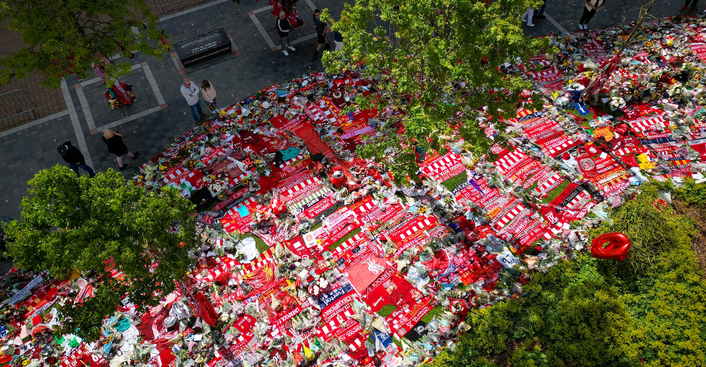
In an impressive show of respect, Liverpool and Manchester United honored the legacy of departed players Diogo Jota and Bernardo Silva during a recent match at Anfield. This gesture reflects the intertwined history of the clubs, which date back to their first meeting in 1894. Their rivalry, marked by numerous significant victories and mutual gestures of tribute, highlights a shared commitment to remembering fallen stars. Further analysis reveals the depth of this extraordinary football rivalry.
In a significant reflection of shared respect amidst rivalry, Liverpool and Manchester United have consistently honored fallen stars from both clubs. This tradition can be traced back to the intense competition established since their first meeting in 1894. Historical encounters have shaped the narrative, with Liverpool recording 80 wins against United’s 68. Importantly, their rivalry intensified in the post-World War II era, particularly after Liverpool’s promotion in 1962, signaling a renewed battleground for supremacy in English football(40 league titles).
Throughout the years, matches have often surpassed mere competition, becoming platforms for memorials and tributes. Iconic moments, such as Liverpool’s 4-1 triumph at Old Trafford in March 2009, featured celebrated players like Fernando Torres and Steven Gerrard, making a lasting impact amid the fierce rivalry. More recently, the 2023 clash at Anfield, where Liverpool achieved a historic 7-0 victory, echoed with both fanbases, additionally emphasizing the duality of competition and commemoration. The match was also marked by the recent recent dominance(33.47%) of Liverpool in head-to-head fixtures that has added extra significance to their achievements.
Matches have evolved beyond competition, becoming stages for honoring legacies, as seen in Liverpool’s iconic victories and shared tributes.
Traditionally, clubs engage in ceremonies to honor deceased players and staff. Moments of silence and the wearing of black armbands serve as respectful gestures during fixtures. In November, players wear red poppy emblems to commemorate those who sacrificed their lives in military service. Pre-match video tributes highlight the contributions of fallen stars, encouraging a collective remembrance. The heightened emotions characteristic of derby matches often lead to particularly moving memorial ceremonies.
In addition, gestures of unity among rival supporters signify an overarching respect that goes beyond competition. This shared legacy emphasizes that, despite rivalries, both clubs acknowledge the significance of each other’s contributions to football.
Charitable collaborations and memorial events highlight a commitment to shared values within the sport. Such commemorative practices promote unity among diverse fanbases, solidifying historic ties and emotional connections that define the essence of football culture.