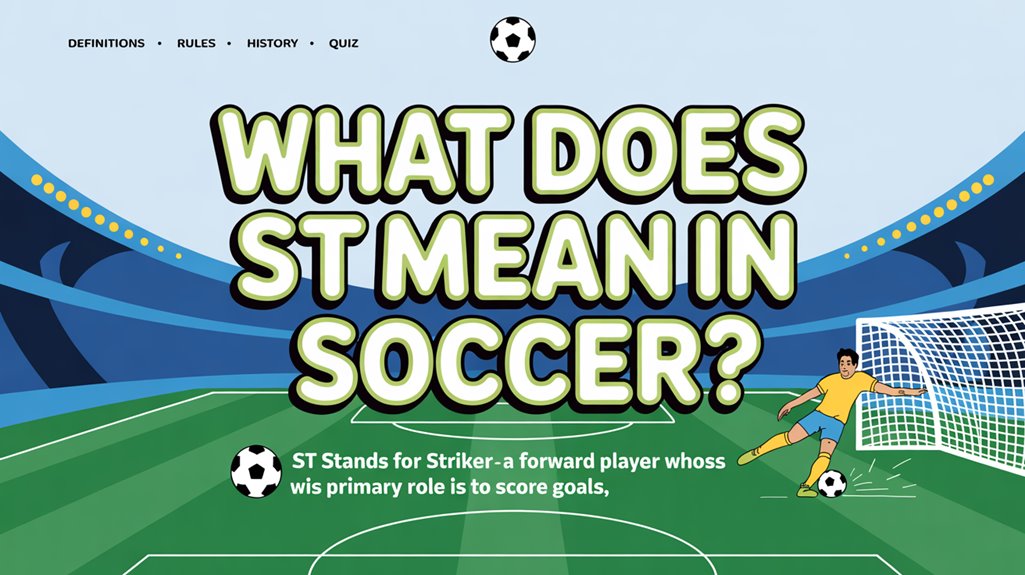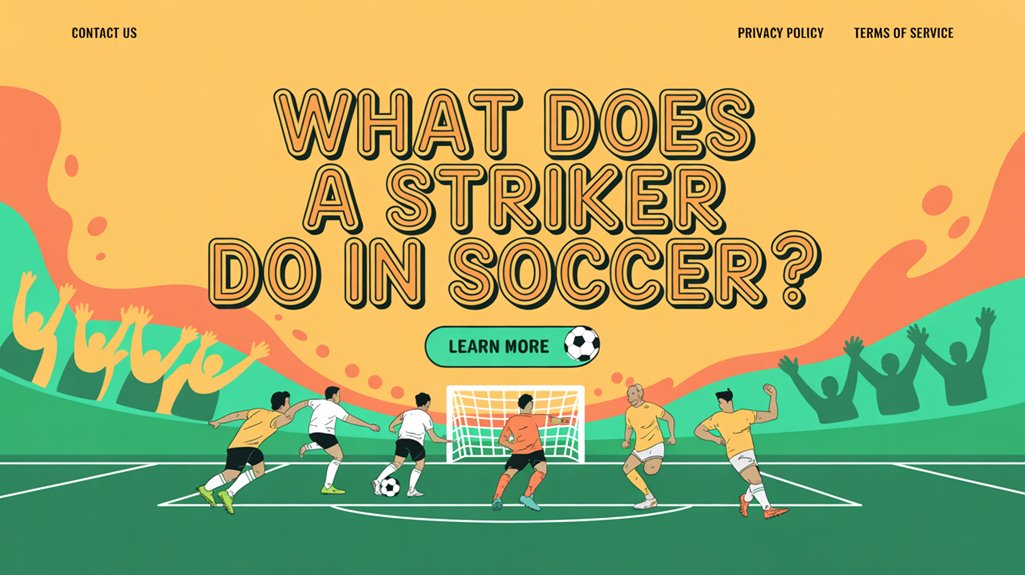
A striker in soccer is primarily tasked with scoring goals and is central to the team’s offensive strategy. Positioned nearest to the opponent’s goal, strikers convert scoring opportunities into goals. Their responsibilities include effective movement, playmaking, and assisting teammates. Technical skills such as finishing, dribbling, and striking accuracy are vital. Additionally, strikers engage in defensive pressing to regain possession. Their performance is essential, as each goal contributes to the team’s overall success. Further perspectives into their role are available.
In soccer, the striker occupies an important role on the field, primarily responsible for scoring goals. This position is often considered the focal point of a team’s offensive strategy. Strikers are positioned closest to the opponent’s goal, awaiting opportunities to convert chances created by teammates into tangible results. Their primary objective is to find the back of the net, thereby directly contributing to the team’s success. Like a center forward, they must demonstrate exceptional finishing skills and strength in attacking positions.
A striker’s responsibilities extend beyond merely scoring. They must possess a blend of technical skill, tactical awareness, and physical attributes. Technical skills include precise finishing, effective dribbling, and the ability to strike the ball with accuracy from various distances. Furthermore, they must exhibit situational awareness, knowing when to make runs into space and how to position themselves to receive the ball. This positioning is critical, as it can create scoring opportunities not only for themselves but also for fellow teammates. Similar to how a defensive midfielder anchors the team defensively, a striker anchors the offensive line through their positioning and movement. Regular fitness training helps strikers maintain the stamina needed for continuous movement throughout the match. Each successful strike earns the team one point, making their role crucial for match victories.
In many cases, strikers work in tandem with other offensive players. They often engage in playmaking roles, setting up assists by distributing the ball to wingers or attacking midfielders. Their movement, both on and off the ball, plays a strategic role in stretching defenses and creating gaps. This interplay requires strong communication and teamwork.
Additionally, strikers must understand defensive tactics. They are often tasked with pressing opponents to regain possession high up the field. Their ability to perform this defensive work can help shift the situation of a match, forcing the opposition into mistakes.
The psychological aspect of being a striker also warrants consideration. The pressure to score can be immense, as goals can define matches and seasons. Hence, mental resilience and confidence are crucial traits in a successful striker. The modern soccer striker role has evolved to become more dynamic, requiring players to adapt to various formations while maintaining their scoring efficiency.
Frequently Asked Questions
What Are the Essential Skills for a Successful Striker?
Essential skills for a successful striker include exceptional finishing ability, precise positioning, strong dribbling, quick decision-making, and effective communication. Additionally, physical strength and agility enhance their effectiveness in creating and converting goal-scoring opportunities.
How Does a Striker’s Role Change With Different Formations?
A striker’s role varies considerably across formations. In a 4-4-2 setup, they often partner closely with another forward, while in a 4-3-3, their responsibilities may shift towards pressing and creating space for wingers.
What Physical Attributes Benefit a Striker’s Performance?
Physical attributes such as speed, agility, strength, and endurance greatly enhance a striker’s performance. These qualities enable them to maneuver effectively, outpace defenders, and maintain competitiveness throughout the match, ultimately improving their scoring opportunities.
How Can a Striker Improve Their Goal-Scoring Abilities?
To enhance goal-scoring abilities, a striker can focus on improving technical skills, analyzing game footage, increasing physical fitness, practicing finishing techniques, and developing spatial awareness to capitalize on scoring opportunities during matches.
What Strategies Do Strikers Use to Evade Defenders?
Strategies employed by strikers to evade defenders often include quick directional changes, using body feints, maintaining a low center of gravity, and anticipating defensive movements, allowing them to create space for scoring opportunities effectively.