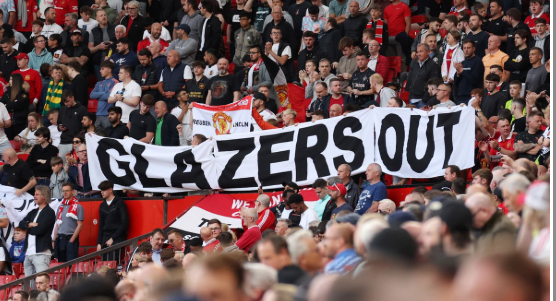
Manchester United fans are organizing protests against the club’s proposed £4,000 Personal Seat License (PSL) intended for financing a new stadium. This initiative, viewed as a barrier to long-term supporters and local communities, has sparked significant opposition, with concerns over the potential “Americanisation” of football and the loss of its working-class roots. The fan organization The 1958 plans demonstrations during high-profile matches to voice their discontent. This situation highlights a growing rift between fan interests and club management. Further developments are anticipated.
Manchester United fans have rallied in opposition to the proposed £4,000 Personal Seat License (PSL) fee, a move perceived as undermining the club’s long-standing commitment to its loyal supporters. This fee, aimed at new stadium season tickets, has ignited significant backlash, as fans fear it will create financial barriers that exclude long-term supporters, youth, and local communities. The club’s historical success, including multiple Premier League and UEFA Champions League titles, has been built on the foundation of a strong and dedicated fan base, with media coverage playing a crucial role in its widespread popularity. The sentiment among fans is one of discontent, with many believing that the proposal shifts focus from club loyalty to profit-seeking motives, which is reminiscent of the debt issue that has plagued the club since the Glazers’ acquisition. The rivalry with Liverpool, fueled by geographical proximity, has historically been a key aspect of Manchester United’s identity and a source of intense competition.
Fans express deep discontent, viewing the PSL as a shift from loyalty to profit, jeopardizing football’s working-class essence.
The sentiment among fans is one of discontent, with many believing that the proposal shifts focus from club loyalty to profit-seeking motives. Many supporters fear that the PSL symbolizes a creeping “Americanisation” of football, which threatens to distance the sport from its working-class roots and affordability principles. Critics of the PSL have expressed concerns that a £4,000 cost could lead to empty stadiums as many fans may simply be unable to afford it. Meanwhile, the club’s current predicament is exacerbated by its 15th place finish in the Premier League last season, marking the lowest position since 1974.
Despite initial optimism regarding prospective changes under new ownership led by Sir Jim Ratcliffe, disappointment has taken hold as expectations have not aligned with recent proposals.
Club officials have stated that the PSL, framed as a one-off payment granting the right to purchase a season ticket, remains a theoretical element rather than a finalized plan. Nevertheless, discussions around it have intensified, especially in light of potential stadium relocation.
Previous instances of similar financing models in other sports have often met with criticism, making such approaches uncommon in traditional European football.
Fan organizations, particularly The 1958, have voiced organized opposition, planning protests for high-profile matches, including the season opener against Arsenal. These demonstrations aim to highlight the proposed PSL’s potential exclusionary impact, as well as to express broader dissatisfaction with the club’s current direction.
As United’s management maneuvers through the challenges of fan engagement and new revenue streams, the gap between supporter interests and ownership priorities remains a contentious issue.