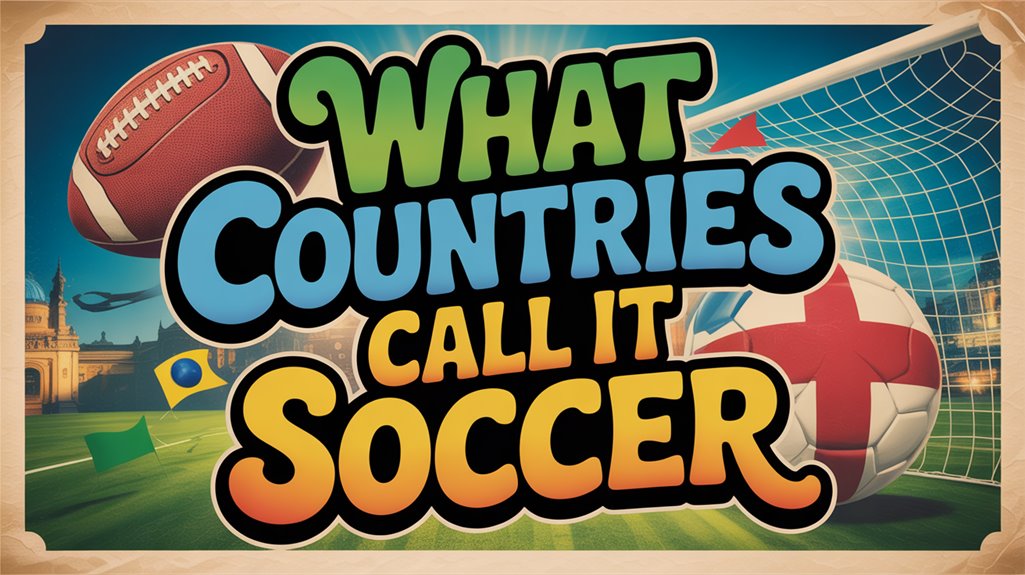
Countries that use the term “soccer” include the United States, Canada, Australia, New Zealand, and some Caribbean nations. This terminology is employed to distinguish association football from various sports known as football in different cultural settings. In the U.S. and Canada, “football” refers to American and Canadian football, respectively. Meanwhile, Australia commonly identifies its own codes of football, such as rugby and Australian rules. Understanding these distinctions provides understanding into global sports nomenclature and its implications.
In which countries is the term “soccer” preferred over “football” to describe the sport known globally for its widespread popularity? Primarily, the term “soccer” is employed in nations such as the United States, Canada, and Australia. These regions have their own cultural sporting environments where “football” frequently refers to different sports.
In the United States, “football” denotes American football—a highly popular sport featuring distinct rules and gameplay. Consequently, to prevent confusion, the term “soccer” emerged to identify association football. Soccer‘s growth in the U.S. has been significant since the latter half of the 20th century. Major League Soccer (MLS) has contributed to its increased visibility and popularity at both the professional and grassroots levels.
In the U.S., “soccer” distinguishes association football from the American football phenomenon, reflecting the sport’s growth and popularity.
Similarly, in Canada, “football” typically relates to Canadian football, a variant mirroring American football in structure and style. The term “soccer” is prevalent within the country, enabling the populace to distinguish between these two football codes. Canada’s soccer community has been expanding, particularly following the 2015 FIFA Women’s World Cup and successful men’s national team campaigns.
In Australia, “football” commonly refers to Australian rules football and rugby league, two dominant sports in the country. To address this duality, “soccer” is commonly employed to represent association football. The sport’s profile in Australia has witnessed growth through leagues such as the A-League and related national team efforts.
Other countries incorporating “soccer” include New Zealand and certain Caribbean nations, where local sports variations necessitate the use of the term to maintain clarity.
The global setting reflects a variety of terms based on cultural and linguistic situations, illustrating the rich diversity of sports nomenclature. The use of “soccer” remains crucial in maintaining distinct identities for association football amidst differing sporting traditions.
Frequently Asked Questions
Why Do Some Countries Prefer the Term Soccer Over Football?
Some nations prefer the term “soccer” to distinguish between various types of football, such as rugby or American football. This differentiation helps clarify communication and reinforces local cultural identities within the sport’s global environment.
When Did “Soccer” First Start Being Used?
The term “soccer” originated in England during the late 19th century, derived from “association football.” It became popular in various regions, especially where the term “football” referred to other sports, leading to ongoing terminology debates.
Is There a Difference Between Soccer and Football Rules?
The difference between soccer and football rules primarily lies in terminology and regional variations. While both sports share a common origin, variations in rules, gameplay, and equipment can occur depending on the sport’s governing bodies and local customs.
Which Countries Officially Recognize Soccer as an Alternative Term?
The term “soccer” is officially recognized in several countries, particularly in the United States, Canada, and Australia, where it distinguishes association football from other forms of football, such as American and Australian rules football.
How Has the Term “Soccer” Evolved Over Time?
The term “soccer” originated in England during the late 19th century as a colloquial abbreviation of association football. Over time, its usage spread, particularly in countries where other football codes dominated, leading to a distinct identity.